
Thread + Thread + All the Threads
Making Connections that Paint the Picture

I recently went back to my OG blog (on my website, not here on Substack) and I read through some ollldddd posts. I like how I structured things circa 2011, where I numbered the variety of subjects as I wrote, and somehow it all came together. There’s an amount of trust in writing this way. I *feel* like there is a connection between the things on my mind, and I have this hope that as I write it all out¹ that the thread that runs through them will untangle itself.
I’m trying to keep track of the things I read and listen to—just for myself, even!—and I’m not great at it. It’s because sometimes I know right away when an idea or phrase or factoid will stick with me, and sometimes I only know when my mind keeps returning to it over a long period of time, so long that I end up losing track of the source. I end up with so many threads, wondering what to make of it.

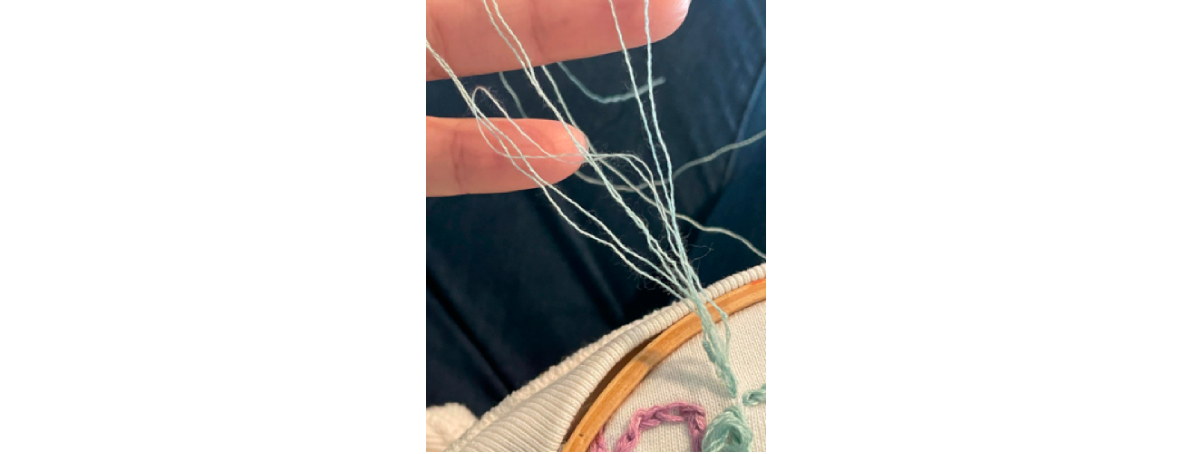
One of my toxic traits is needing all the colors for whatever craft I’m doing; here, it’s embroidery thread. I listened to Creative Pep Talk #543 last night, something to fill the caverns of my mind while putting away laundry that has been ready to be sorted for longer than I care to admit. Andy J. Pizza went through three sets of contradictory ways an artist can approach work: Standing Out vs Fitting In, Self vs Audience, and Plotting vs Pantsing. (Plotting = writers who plan their stories in advance, and Pantsing = writers who create their stories by the seat of their pants.) These are things I wrestle with all the time. I wish I could pick a lane and have it work for all my days, but the ground beneath me always seems to shift and before I know it, I’ve been toppled over and I wonder what just happened. Even though it’s a podcast about the creative process, I went ahead and applied it to my life in general, because I’ve been pantsing my life for a while… and now I need to go ahead and plot it for a while. Which honestly smacks of BOREDOM, plodding along like a lumbering ox, doing the same ole same ole, making my way towards a predetermined endpoint. I can’t talk about it in detail, lest I reap the dopamine rewards of feeling like I’ve done this thing before I’ve done anything at all.
Don’t worry though, I am also applying some of the Plotting method to my actual creative work, not just my life. I’ve been corresponding with Moose and Slushie; they are surprisingly communicative as we’ve traded letters back and forth. Have I told you about them? Even though we’re getting better acquainted, I need to somehow guide the process, too. I am not sure they will like it. I’ll let you know how it goes.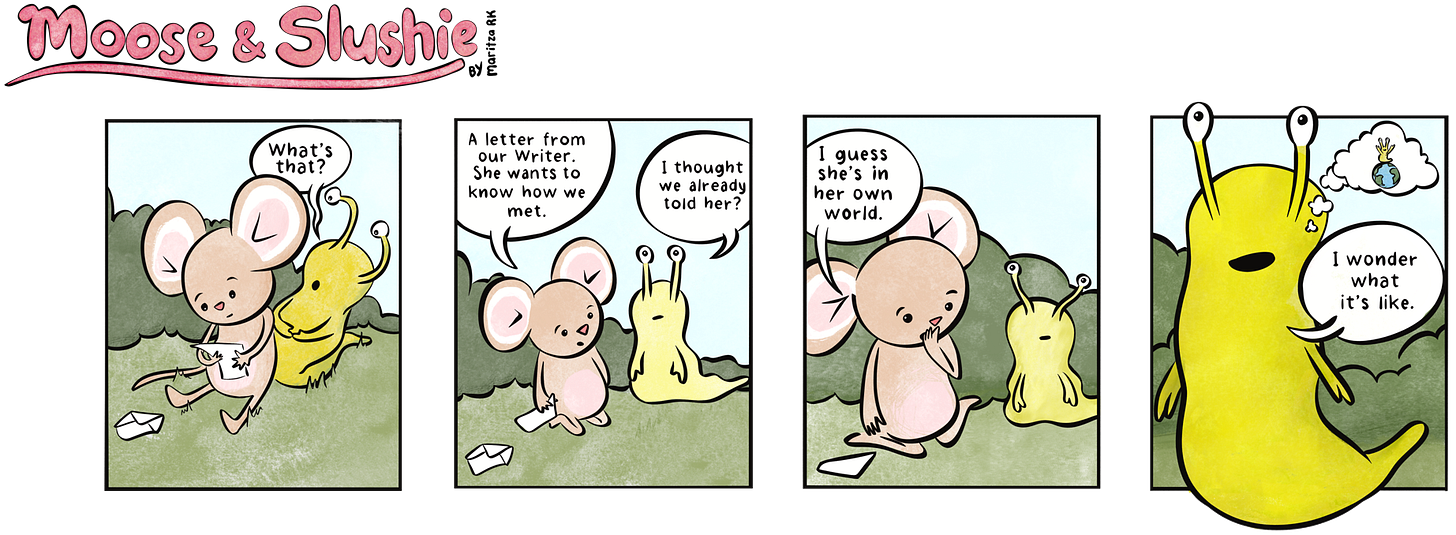
I started sewing again in December. And it really makes no sense.
I say this because I was simultaneously making new work for my portfolio, so that I could present work I felt proud of AND connected to when I went to the SCBWI Winter Conference in NYC. (Here’s a post about that event by Bay Area buddy Susan Cabael!) I took a couple of Mr. Tom Froese’s Skillshare illustration classes to get back in touch with my conceptual approach to artmaking, which is something I had loads of when I worked as a fine artist, but somehow it went MIA when I set my mind to learning how to draw and illustrate. I had to step into this portfolio reset in a sideways or backwards way… . If I focused on making art for the sake of My Portfolio, I’d lose the thread again (the thread where I work in my native intuitive state.) I had to tell myself: Just make some new illustrations about whatever you want, and if you like what you make, you’ll have new work for your portfolio. If you aren’t crazy about it, big whoop! (Even though it was kind of a big whoop, to be honest, but I tried to squash that sensation because of the dark and terrible thing that it is.) And I ended up I finishing eight new pieces ²… more than that, actually.
This also doesn’t make sense ³.
Because: I wasn’t drawing from morning to night. I was actually inexorably drawn (haha) to making things with my hands. Tangible things. Things I could feel and construct in 3 dimensional space, useful things that I could gift out or hold onto, things that would have a place in this world.
Most of the (textile) things I’ve made lately. One more at the end of this post. I’ve continued to ask myself: WHY AM I DOING THIS?… as I pull a needle and thread through fabric over and over.
I’m saving the world, one crafty craft at a time. ⁴Another podcast I listen to all the time is Stuff You Missed in History. I just listened to their two-parter on the History of Embroidery! ⁵
From Stuff You Missed in History Class: Embroidery History Sampler, Part 2:


“One of the really thrilling things about embroidery today is that it’s going through a kind of revival, but one which, while often subversive and unconventional, connects it to the centuries-old tradition of communication as well as art. While people still make embroidery pieces that are intended simply to be beautiful, there are many stitchers who specialize in protest art made through embroidery or thought-provoking concept pieces. This is not the first time a surge of people of interest has happened, and it’s interesting to note that handiwork has experienced surges in popularity in the US during times of political upheaval.
In the 1870s, as the US was in recovery from the Civil War, embroidery became more popular than ever as a pastime. Once again became popular in the 1960s, when the country was experiencing the unrest of the Civil Rights Movement.”
What kind of world do we want to live in?
It’s something I think about a lot, and it’s a question that was posed in The Ezra Klein Show’s podcast episode ⁶ called We Didn’t Ask for This Internet. ⁷
And I didn’t. “I didn’t ask for this, Internet! Leave me alone!”
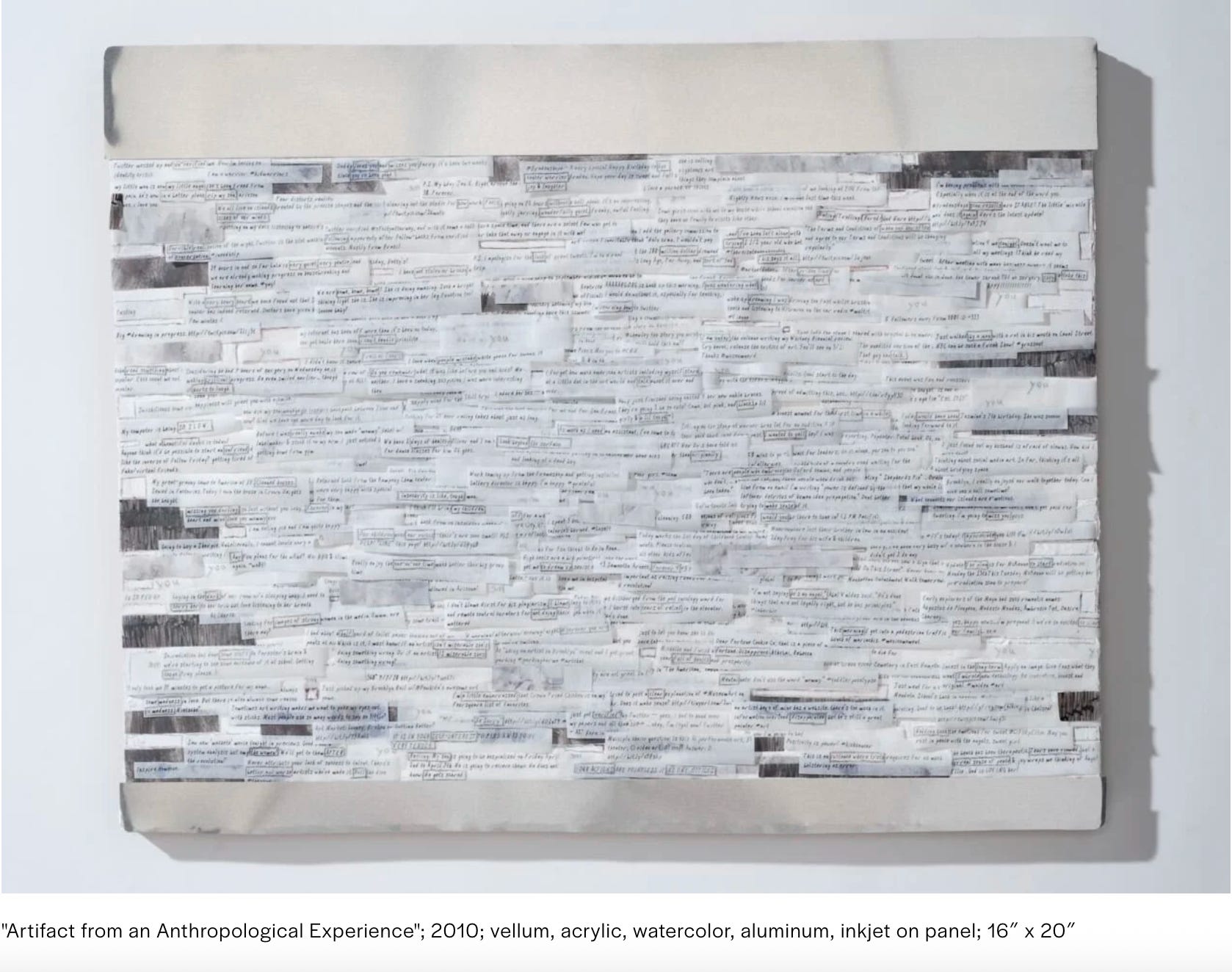
I continue to be fascinated by how people interact online and what online life does to us or for us. I made art about it so much, that five of the ten fine art series that I made from 2010-2021 were about exactly that. ⁸ (Here is the first of them, An Anthropologic Study on Social Media.)
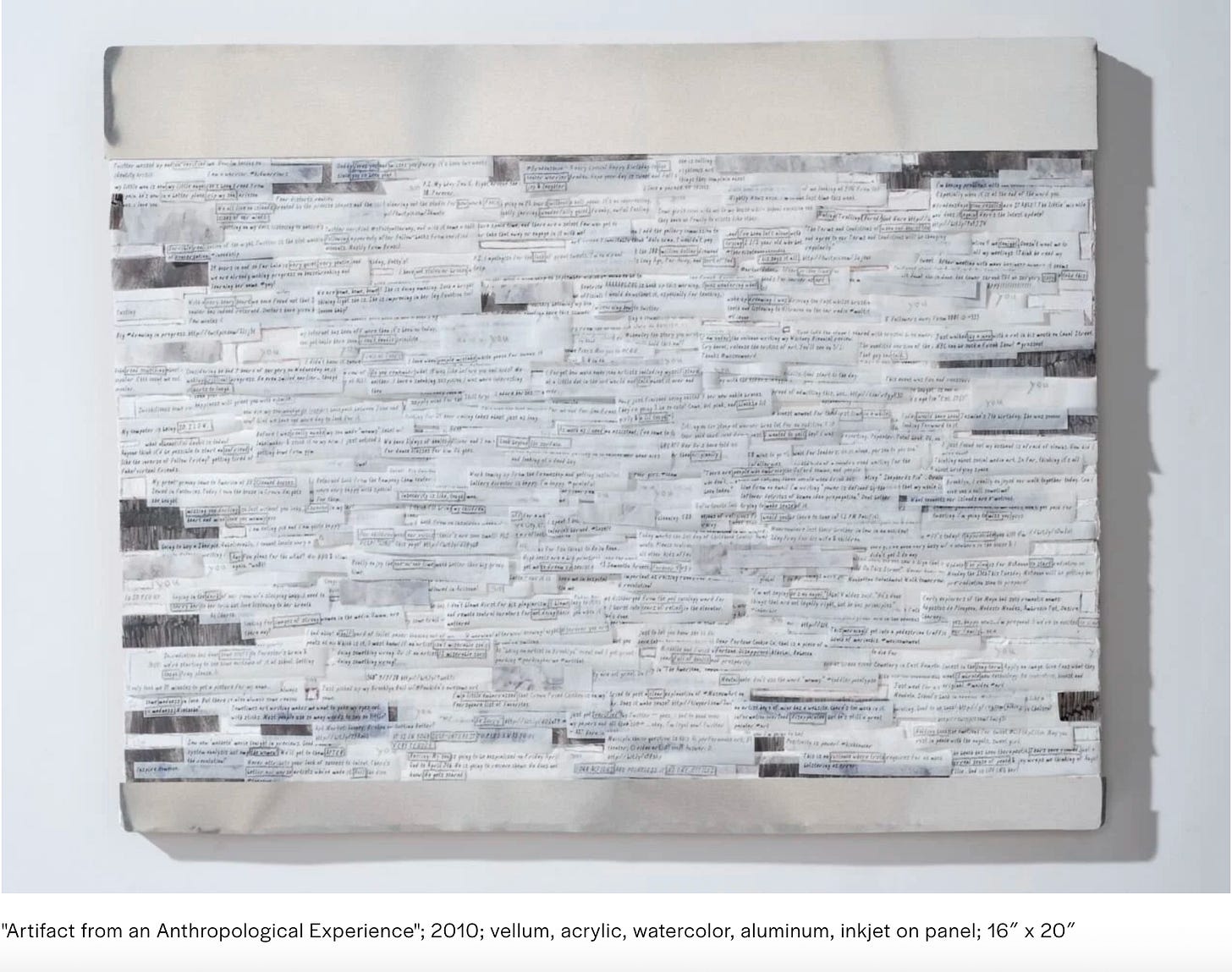
I continue to wish I could participate like I used to, get my work “out there” like I used to, even though I DO try and still come up short all the time. I continue to wonder WHY I can’t change and just do it; even though this has been asked (of myself) and answered. I keep an eye out for tips and tricks. How to get my instagram posts/reels seen? How to engage people? How to modify for each platform? But it’s all just so exhausting, and I can’t. I don’t. I won’t. I want freedom in the platforms that are designed to addict us. I want to share beauty and wonder, and I don’t want to trap anyone.
Then again, I want (my work) to be seen. OMG. I’m that kind of artist. (×_×)
On the other hand again… it’s OK! I attended an online class with the delightful Forrest Burdett, called The Art of Social Media, and arranged by my co-SCBWI-volunteer ZuZu Gong. One of the things I loved was his genuineness about the joy & pain of getting our work into the world. He was honest about the effort it takes and the emotional toll, but also talked about the limits he allows because he’s not a machine. Honestly, the more I hear artists talk about how this whole thing is the slog that it is, the (tiny eensie bit) easier it is to participate (a little.)
“What kind of world do I want to live in?”
One that I can see with my own eyes, that I can feel and experience, where people treat people like people, and my time and attention isn’t stolen from me. I want to be able to share my work somewhere on a level accessible field. I’ll never be able to force reception of my work or control the size of the audience; it would be bad if I could. I don’t want that done to me, and I don’t want to do it to other people.
Are you still with me, reader? Tell me, are you skimming?
(It’s ok! I would if I were you!)
More podcasts. I’m almost done. You’re free to exit early! ⁹
At some point in the last month, I burrowed into a rabbit hole about Shakespeare and Hamlet because of reading Hamnet by Maggie O’Farrell and watching the movie (in theater!) too. Beautiful, difficult. Here, the Academy Award winning director shares in NYT Daily’s The Interview: Chloé Zhao Is Yearning to Know How to Love in a response to the question by
David Marchese: I want to know if you have any similar experiences with film, where you saw films and then after seeing them, understood yourself better.
… after responding with a question, she answers…
Chloé Zhao: …that is the reason why we have art and storytelling. //
It’s not trying to teach us something that we don’t know. It’s trying to help us remember who we are, to bring us back to the source. So for me, that film [made me realize that this deeply uncomfortable tension I feel in my body, this yearning that sometimes feels like it’s just going to consume me, it is actually this loneliness, this isolation that [Wong Kar-Wai’s Happy Together] captured.//
On the other side of it, it’s actually my deep, deep yearning for connection and for relatedness and for love, and that there’s nothing wrong with it. And that film is full of mystery; so is The Thin Red Line. And that’s why when we’re going through our greatest heartbreak and most difficult time, we don’t look for facts. We look for poetry, because it allows us to stay in the mystery.Here, the author of Hamnet, on working with Zhao as they both wrote the screenplay for the movie. What Should I Read Next?: Ep 513: Maggie O’Farrell on Writing for the Page and Screen
Maggie O’Farrell: I think as the novelist, you have to go into the project knowing and embracing the idea that it is going to be different, and it should be. You couldn’t and shouldn’t make a film that’s a replica of a book because the book already exists. A person sitting in an armchair reading a book is interacting with the narrative on the page in a completely different way than an audience in a cinema watching something on screen. //
It’s exactly the way I personally wanted it. But the film is Chloe’s vision of that story, and that’s absolutely right because it’s hers, … she’s the director.//
I learned a huge amount about narrative for the screen. The first lesson was economy. My natural instinct as a novelist, when I was writing a scene, was to write Interior, a house. And then I would want to say: The house is on a busy main street, it has this, it has that, the people inside it are wearing this and they’re feeling this. Because that’s the way I’m kind of trained. //
But I would look at the version that Chloe had written of the same scene and she just wrote: Interior: House, then straight into the dialogue. And I think, okay, all that descriptive, all those lovely adjectives that I’ve chosen carefully, I need to save all that for my novels. //
Screenplays do look kind of bare in a sense, especially to somebody who like me is used to working in fiction. But then when you go on set, this very, very alchemical and magical thing happens where …you have to trust all your collaborators with all that nuance and detail that you’ve had to take out of the book. You rely on the person who’s done the set design, you rely on the cinematographer, the lighting people, the costume people, the actors of course, who can put all the emotion and nuance back into those words and inflections and expressions. //So I remember that my first day on set, I was wearing headphones and I thought, okay, I see it, I see it. All that stuff that you have in a novel, which we took out for the screenplay, has all been put back in in this new form.
All the people coming together, and the trust it takes to make a beautiful thing happen.
Last one, I promise.
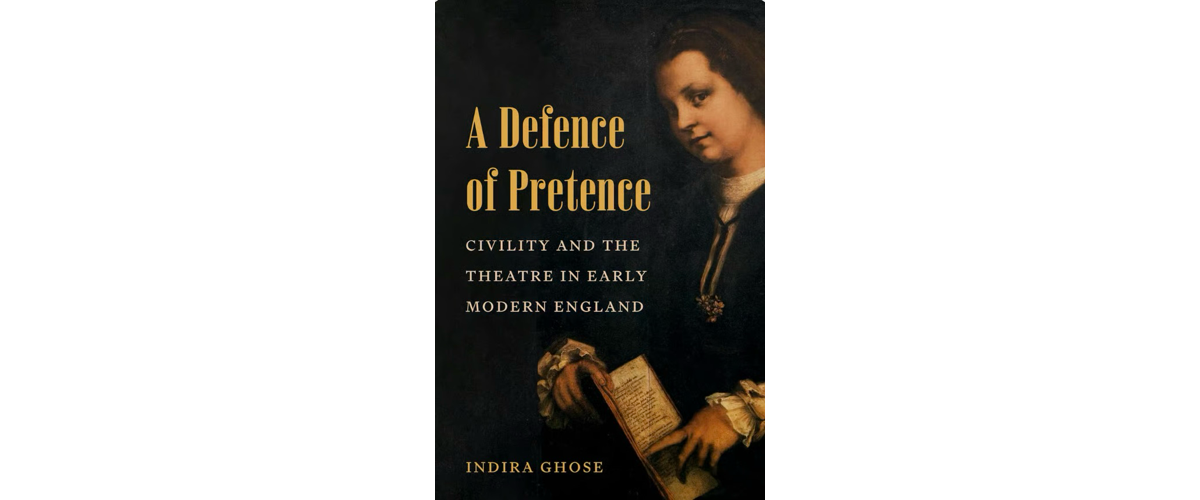
The History of Literature: Ep 770: Shakespeare and Civility (with Indira Ghose)
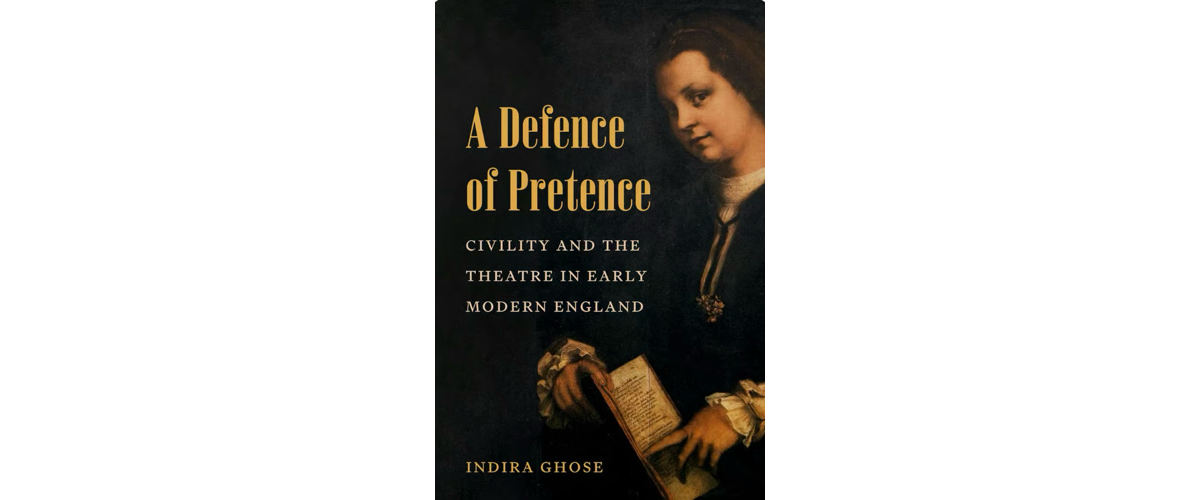
Indira Ghose: The early modern period is just peculiarly fascinating. I mean, the parallels to today’s world are just astounding. It was an age of extreme polarization, drawn by religious conflict, not only between Protestants and Catholics, but a whole variety of shades in between. //
It was an age that laid the groundwork for… so many of the developments that have shaped our world… from the nation state to capitalism, to individualism, which is why we call it the early modern period.// …
It was really an age in turmoil, of enormous strife and anxieties. …
Jacke Wilson: Well, that kind of takes us right into my next question, which was going to be: What drew you to these questions of civility and pretense? //…
[Civility] might be a way to kind of start to stitch together a society [where] there’s turmoil or strife or polarization. Do you see that as being kind of a driving force behind what you’re focused on here with civility?”In the next section, they discuss two Renaissance authors who wrote about civility… *everyone* has heard of them (cough cough, I had not.)
One was Erasmus (On Good Manners for Children, one of the first international best sellers!), who they say “believed that one way of healing [social] rift was … accommodating oneself to people with whom one disagreed.” The kind of cooperation that comes from politeness that bridges differences. Deference. Humility. Respect.
The other was Baldassare Castiglione, who talked about manners as a path to prestige and social climbing, reaching elite circles to access power and influence. Here, they say, manners weren’t about respect and consideration, but about setting oneself apart, learning the mannerisms of the court to make one’s place there. Pretense. Pretensions. Putting on airs.
They discuss the difference between acting a part with the purpose of bringing people together (enthusiastic hiker friends slowing down to accommodate their indoorsy moseying friend, just as a totally random example) vs. acting a part so as to advance oneself, to protect hidden motives.Jacke Wilson: You could also say that people who are in power really could use civility. Oppressive regimes either form a committee to study something… or they might say: Why don’t you all just accept your fate. //
And maybe for a population, it’s important to rise up and say, we’re not happy with the way we’re being governed, or we’re hungry, or we have real grievances. We don’t want to just have you fob this off on politeness, that we’re all supposed to just settle down and be nice to one another and to you, the rulers. //
Has civility been used by authoritarian regimes to keep people from protesting?
Indira Ghose: It has. And in fact, today civility is often condemned as a superiority of Western culture, of other cultures and so on. But I think one of the things we learn by looking at the theory of civility, it’s not about an evasion of conflict or a matter of of appeasement or self-censorship, because conflict is a constant in human society. //
Civility is how we manage conflict. It’s not about whether we disagree, but how we disagree. And if you look at, say, the civil rights movement, regimes in power tend to turn around and accuse others of offending civility or transgressing against civility.//But it’s how you define civility, it’s a different form of civility. There are still norms of respect that people like Martin Luther King were very keen to insist they were still following. //
And civilities always change. The norms that we accept in society, they change in the course of society. And it’s perfectly legitimate to advocate to change certain norms. //
But that, for me, doesn’t mean jettisoning the entire idea of civility.
Then they make their way to Shakespeare’s Hamlet.
Jacke Wilson: You say the theater kind of worked as a laboratory for working out the era’s conflicts. What kinds of conflicts were being worked out on the stage?
Indira Ghose: “Well, it was an age of social division and of a world in turmoil. But there was censorship. So the theater wasn’t permitted to stage the social conflicts in contemporary society.//In coded ways, [they] comment[ed] on what was going on. And the theater was also remarkably under attack at the time. Authorities viewed it with suspicion, as seditious ideas being circulated, which fostered crime and social unrest. //
And it was under attack by moralists, particularly Puritans at the time, who regarded theater as a sort of hotbed of immorality. And what the theatre came up with in response was quite remarkable at that time. That is, it was the early modern theatre didn’t just produce a stream of masterpieces that we still read today. It was also a remarkably self-conscious theatre in the sense of it was drama about drama, about acting, about pretense, about make-believe. That was one of its big topics. I mean, if you look at not only the plots, but also the form: breaking the fourth wall. //
It goes back to sort of plays within the play, addresses to the audience, all sorts of ways of drawing attention to the fact that this was fiction and drawing attention to the issue of acting and pretense. Just to take one example, the first time we see Hamlet on stage, he launches into a defense of himself in connection with the accusation of simply faking it. His stepfather and his mother accuse him of not really feeling the grief that he shows. //
And he says, “I know not seems.” I’m not faking it. I’m not pretending. I’m authentic. I’m really feeling what I seem to be just performing. And later in the play, he stages a play within the play.//These issues of pretense and make-believe and dissembling are sort of at the heart of theatre at the time.
Jacke Wilson: “Yeah. I mean, you could see where a playwright who is, maybe a little self-defensive about acting and about its importance and all of that, kind of turning that around and saying, well: Look at all of you who are reading Castiglione and aren’t you just painting your faces and putting on clothes and trying to be someone that isn’t your authentic self? Isn’t this a society that’s full of acting and people who value a type of acting in real life?Indira Ghose: “I think that’s precisely what the plays do. In fact, I think one of the points that they do is call into question whether pretense is always a harmful thing. I think they point out precisely the way you describe it, that in social life, we’re all performers, we’re all acting and performing certain roles, often many roles simultaneously.//
And that what really counts, what we should really be looking at is— what is performing or pretense aiming at? What’s the final end? Does it have a purpose which is in the interest of a wider community, or is it purely about deception and prestige and advancing oneself and so on?


In Case You Missed It
Here are the recent comics:


Footnotes
¹ Writing IT ALL OUT… I already know this is going to be looong. Why? Because I haven’t sent out a newsletter in a while? Because I have fascinating stuff to say? Because there’s a lot going on? Because I am a lot? Maybe. I was about to apologize, but I’ve decided against saying it out loud.
² There are indeed eight freshly minted pieces in my portfolio, and I shared them just like this in NYC. I was proud.
But I’m still sensing a little side eye vibe (in myself) as I share them, because the digital files are live on my iPad as I continue to adjust a little of this and a little of that. Am I apologizing (again)? Perhaps. But I’m not sure if it’s for the illustrations themselves (do you see them lacking something?) OR because I’m questioning their doneness? Because if they are lacking, I want to be the first one to say it, and this waffling, my worry that there are glaring gaps in my work, it doesn’t stop and will I ever go anywhere with my art omg probably not omg why do I work so hard if nothing will every happen omg stop!
I do love waffles, though. 🧇🧇🧇
³ Something that DOES make sense is that I have more time than I used to: my kids are drivers and they’ve grown up. And I don’t work a day job anymore. And my intense volunteer hours wrapped after the Oktoberfest conference I hosted with my SCBWI Regional Volunteer Team. So, not everything is confusing.
⁴ (said kinda cheekily)
⁵ Yes, I was that excited.
⁶ This is becoming a podcast sharing newsletter, I guess. ¯\_ (ᵕ—ᴗ—)_/¯
⁷ Oh, the number of factoids that I blew my mind in this episode. So much so that I listened to it twice AND I took notes. Because… well… for the sake of not listing out alarming things here, comment or email or DM me if you want me to send you the list of things I learned. Or just listen to the podcast. Because there’s a lot.
⁸ If I let myself write that the theme of online life is woven throughout my work, I might roll my eyes to the very backside of my head. Too much! Don’t force this theme!
⁹ I edited the podcast excerpts lightly for readability.
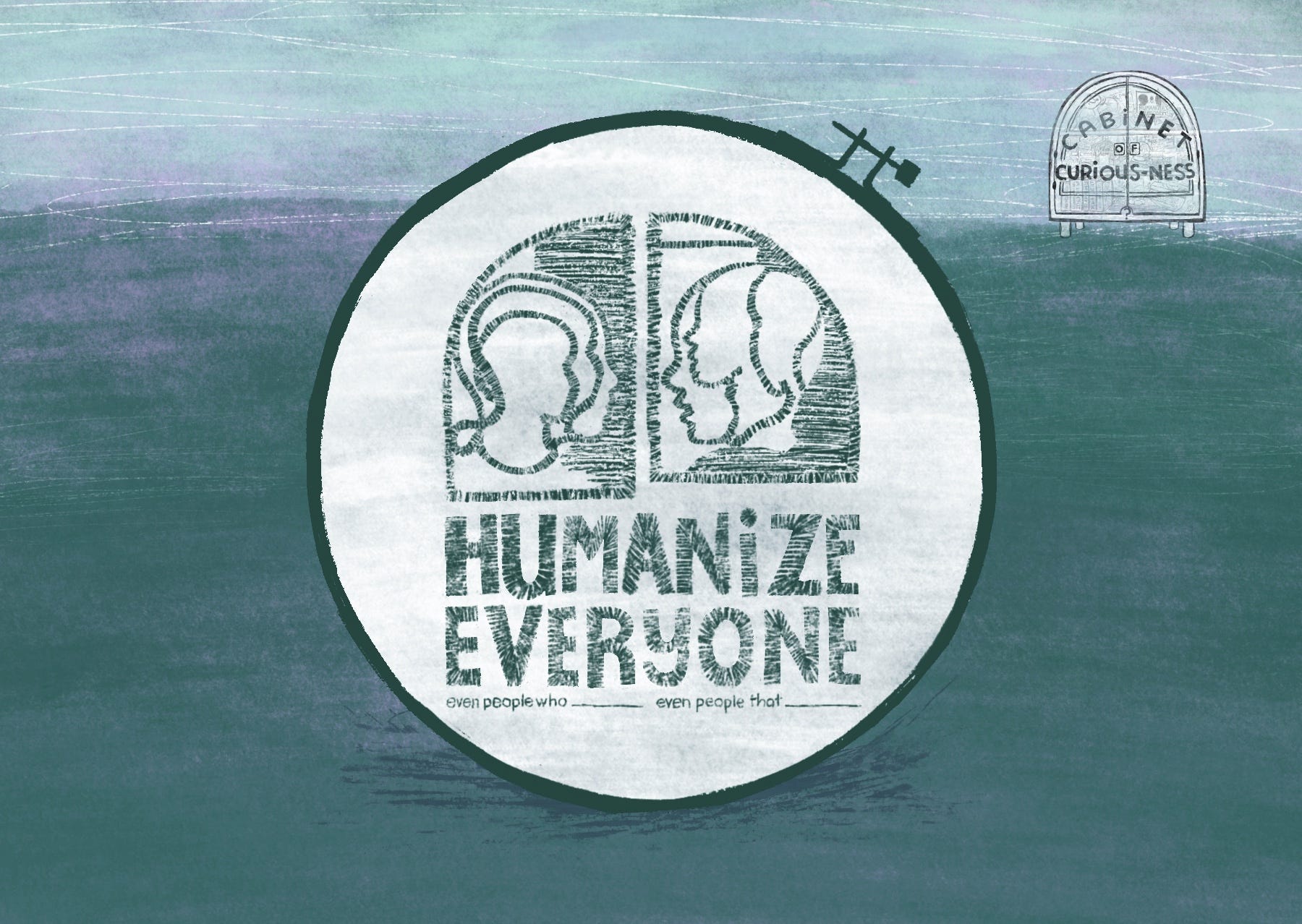
PS: The embroidery illustration that’s in the hoop in the cover image is one I designed, and it’s next on my project list. I just want to figure out what it will be on. A sweatshirt? A tote? I want it on something I can wear or carry out and about; I’ve been wanting this for ages. I’ll let you know what I decide.
PPS: Would you want a sticker designed with a Humanize Everyone illustration? Or… a watercolor + letterpress print? Should I list stuff for sale on my website? I already have the prints, and they are just hanging out in my studio.
hi Maritza, i always love reading your newsletter so I've had this issue hanging out in my inbox for a couple weeks, waiting for a smidge of free time to read it. As always, I love what you have to say. Personally, I think you should trust your meandering way, and let Moose and Slushie correspond with you, and continue to let the yin and yang of your creative leanings pull you in one direction and then the other. I really feel you are on the right path.
And I wanted to mention that I paused when you wrote, "I want to share beauty and wonder, and I don’t want to trap anyone. / Then again, I want (my work) to be seen. OMG. I’m that kind of artist." It reminded me of an exchange I had with Mike Lowery on Friday (an interview that hopefully will be posted on the KCU Youtube channel soon!). He talked about how illustration is fundamentally a *communication* art, unlike fine art, which doesn't necessarily need to prioritize communication in the same way.
I have always loved art, but in particular I've always loved illustration art -- usually much more than I love fine art. I think that's because I'm a person who highly values communication with and between human beings. I think we shouldn't apologize for valuing that. In fact, I think the world needs a heck of a lot more of it!
One of the quotes you shared that made me particularly happy was Indira Ghose's observation that "conflict is a constant in human society. // Civility is how we manage conflict. It’s not about whether we disagree, but *how* we disagree." Again, this goes back to the joy of communication -- one of the most delicious things about reading is when you read someone else's words and feel that sense of YES YES YES I FEEL EXACTLY THE SAME WAY -- I'M NOT ALONE!!!!
Yes! Sell your stuff on your website, that would be so cool!